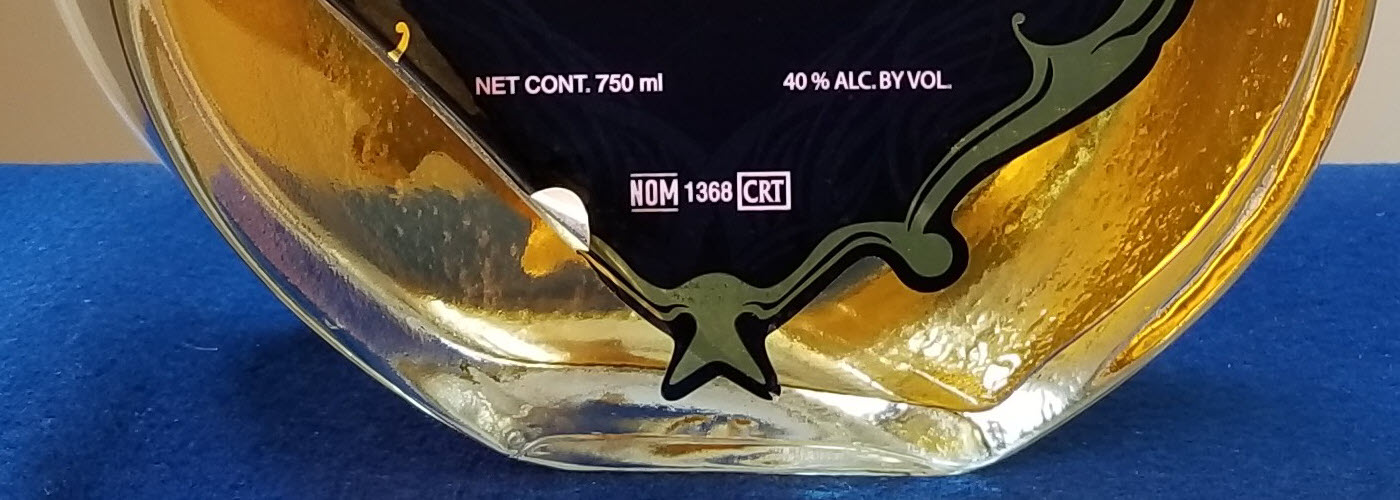
Look closely at a bottle of tequila and you should find a four-digit number preceded by the letters NOM. It might look like “NOM 1493” or “NOM 1414.”
That small number can tell you something the brand name may not: which authorized producer actually made the tequila.
What Does NOM Stand For?
NOM stands for Norma Oficial Mexicana, or Official Mexican Standard.
Tequila production is governed by a specific standard: NOM-006-SCFI-2012, which establishes requirements for how tequila is produced, categorized, tested and labeled. Compliance is inspected and certified by the Consejo Regulador del Tequila, commonly called the CRT or Tequila Regulatory Council.
There is an important technical distinction, though. The familiar four-digit “NOM number” printed on a bottle is more precisely the producer’s Authorized Producer Registration Number, displayed alongside the official NOM mark. In everyday tequila conversation, people simply refer to the entire identifier as the NOM.
The NOM Identifies the Producer, Not Necessarily the Brand
A tequila brand does not always own or operate its own distillery. Many brands contract with an established producer to make and bottle their tequila.
That means several seemingly unrelated brands may carry the same NOM number because they were produced at the same registered facility. The CRT’s producer database, for example, lists numerous brands under individual authorized producers.
This makes the NOM useful when researching a bottle:
It identifies the authorized producer or production facility.
It lets you see which other brands are made by that producer.
It can reveal when a brand changes producers.
It helps confirm that the bottle was made under Mexico’s official tequila regulations.
It provides more transparency than the brand name alone.
For tequila enthusiasts, the NOM is a little like checking the manufacturer’s name behind a store-brand product. The label on the front tells you who is selling it. The NOM helps tell you who actually made it.
The Same NOM Does Not Mean the Same Tequila
Finding two brands with the same NOM does not mean they contain identical tequila.
A single producer may use different:
Agave sources
Cooking methods
Fermentation processes
Still configurations
Barrel types
Aging periods
Blending formulas
Filtration methods
Flavor adjustments
Two tequilas made at the same facility can therefore taste completely different. The NOM identifies the producer, not the recipe.
It is a clue; not a final verdict.
Does a NOM Number Guarantee Quality?
A NOM number confirms that the producer is registered and that the product is supposed to comply with the official tequila standard. It does not guarantee that you will enjoy the tequila or that it was made using your preferred methods.
The NOM is not a quality score. A large industrial producer and a small traditional operation can both be properly certified. One NOM may produce outstanding bottles, forgettable bottles and everything between them.
Think of the number as a starting point for research rather than a seal of exceptional craftsmanship.
Tequila Can Only Be Made in Mexico
Like Champagne, tequila has a legally protected geographic identity. However, Champagne must come specifically from the Champagne region of France - not merely from anywhere in France. Similarly, tequila cannot be made just anywhere in Mexico.
The Tequila Denomination of Origin currently covers 181 authorized municipalities across five Mexican states:
Jalisco: 125 municipalities
Michoacán: 30 municipalities
Tamaulipas: 11 municipalities
Nayarit: 8 municipalities
Guanajuato: 7 municipalities
Jalisco is unquestionably the center of tequila production, and every municipality within the state is included. But selected municipalities in the other four states may legally produce tequila as well.
A spirit made from blue agave outside the authorized territory cannot legally be sold as tequila, even if it is produced using similar methods.
Why You Should Check the NOM
The NOM number will not tell you whether a tequila tastes good. Your glass gets the final vote on that.
What it does provide is traceability. It connects the polished brand on the front of the bottle to the registered producer behind it. Once you begin comparing NOM numbers, you may discover that several brands come from the same facility or that a familiar brand quietly moved its production somewhere else.
That does not automatically make a tequila better or worse. But it helps you understand more about what you are buying, who made it and where it came from.
And when a bottle’s branding tells an elaborate story about heritage, craftsmanship and a centuries-old family recipe, the NOM gives you somewhere to start checking the footnotes.